Conservancy News

The Conservancy’s Preservation Resource Center has achieved yet another award; this time from the U.S. Green Building Council-Los Angeles chapter at its 13th Annual Green Gala on November 30.  Each year, the Sustainable Innovation Awards honor premier projects that have envisioned, designed and built with exceptional achievement and innovation. “The awards recognize project teams that go above and beyond standard practices and use innovative strategies that can be used as a model for future sustainable design and construction,” state awards co-chairs Amelia Feichtner and Patti Harburg-Petrich. “Now more than ever, creative and innovative strategies are essential to the success and sustainability of our diverse communities.” 

The Preservation Resource Center was recognized under the category “Materials and Resources,” which sounds obscure but reflects its achievement as a LEED Gold Certified adaptive reuse of a historic structure to serve a new purpose in the community.  This was achieved with great attention to detail: maintaining over 95.7% of the existing structural elements, recycling 91.5% of the construction waste, incorporating energy and space-saving features as well as maintenance with sustainable products. The surrounding landscape was planted with drought resistant, native plants to take advantage of the city’s climate, drought concerns, and limiting the need for mowing and watering.  

The projects were also judged on impact on the community and the extent to which team collaboration made success possible.  The Resource Center has welcomed over 3000 residents and visitors in its first 18 months of operation and could not have been achieved without the sustained collaboration of many individuals and organizations over the 14 years’ effort! 

The Sustainable Innovation Awards offer prestige and affirmation of your project ‘s commitment to a sustainable built environment. Unlike standardized rating systems, the Sustainable Innovation Awards evaluate merit based upon sustainable strategies that demonstrate exemplary performance by going above and beyond LEED credit achievement.

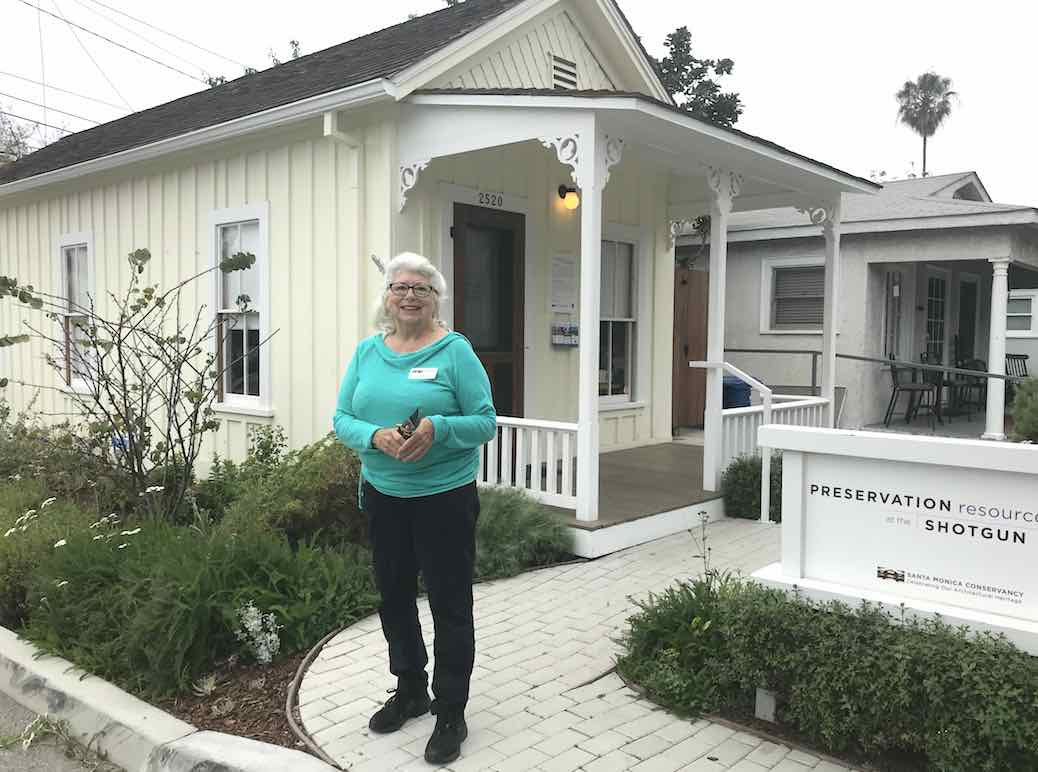
The Shotgun House offers docents the rare opportunity to actively engage visitors in looking at and talking about the house and its rotating exhibits. Docents create interactive conversations that take visitors back to life in Santa Monica in the 1900s while teaching them about the importance of historic preservation.

Photo: FormLA

If you’re fascinated by life in the past, have a passion for preserving our built environment and enjoy informal give-and-take dialogues about architecture, history and other big ideas with visitors from all over the world, this is your chance. Docent applications may be found online  and at the Shotgun House.

Training will begin in 2018 and upon completion, docents will be assigned two shifts per month of three hours each on Wednesdays, Saturdays and/or Sundays from 11 am to 2 pm.

The latest Conservancy newsletter is now available online, as well as past editions. Our newsletter covers upcoming preservation events, preservation issues, features on the people and places of historic Santa Monica and much more.

In the current edition:

  • Annual Holiday Party
  • Call for Nominations: 2018 Preservation Awards
  • City Hall Mural Controversy
  • Conservancy Receives Fifth Award
  • Conservancy Youth Program Awarded Grant
  • KCK Architects Wins California Preservation Award
  • and more news and events!

Download the December 2017 Newsletter or view past issues here.

Our newsletter is published four times per year. Conservancy members receive a copy of each new issue in the mail. If you’d like to become a member, please join today!

Landmarks Commission Report

December 1, 2017

by Amy Green, Commissioner

Landmarks Commission meetings are held the second Monday of the month. Because of work being done on City Hall, they are currently displaced from the Council Chambers. Please check the City’s Boards and Commissions website for agenda and location details.

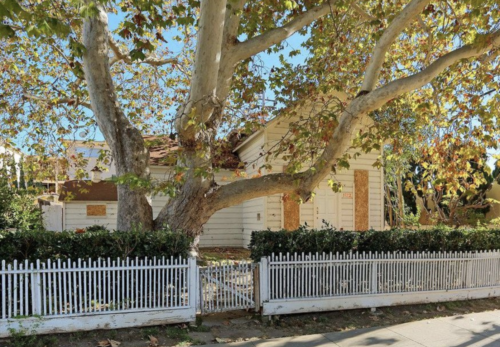
At the September meeting, owners of a multi-family residence at 2518-2522 4th Street submitted a request for a demolition permit as they had begun to remove exterior stucco in order to make foundation repairs to the building. They were cited by the city and told to request a permit through the Landmarks Commission. Due to the extent of the work and new provisions in the Zoning Ordinance it was required to be submitted as a demolition. Local residents and preservation activists requested consideration of the property as a Structure of Merit and a review of the nearby structures to determine if it might qualify as a historic district, which would strengthen the case for designating the property in question as a Structure of Merit. Despite a lukewarm preliminary consultant’s report, the Commission nominated 2518-2522 4th Street as a Structure of Merit and requested further study of the grounds for designation as a historic district.

2518 4th Street. Photo: Ostashay Associates Consulting

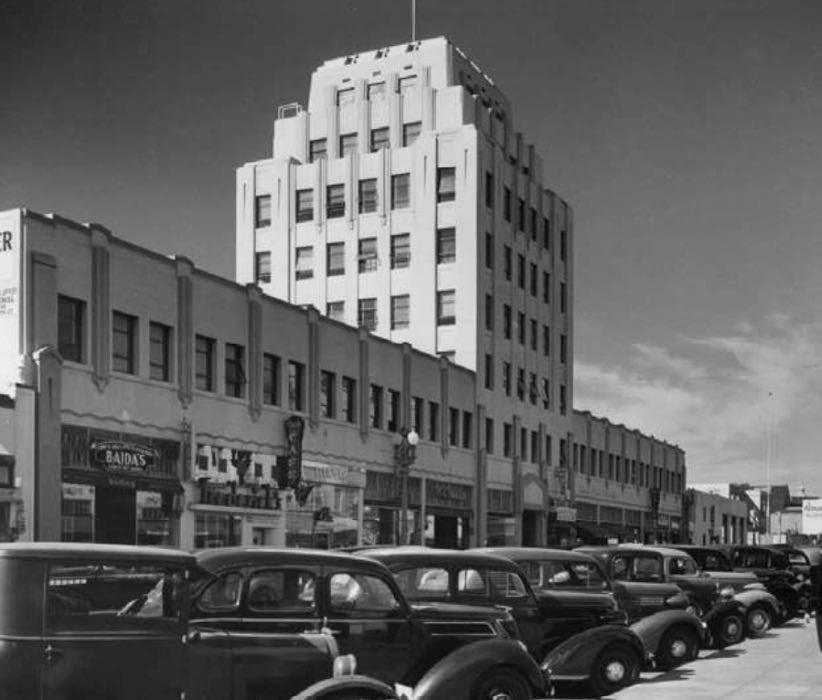
Additionally, renovation plans for the Sears Building continue to move forward. Seritage Growth Properties presented its latest plan to adaptively reuse this classic structure for creative office space and a market food court that highlights local chefs and cuisines. The Landmarks Commission granted the building Certificate of Appropriateness status.

Certificates of Appropriateness were also approved for replacement trees in Palisades Park, the expansion of Big Dean’s at 1611- 1613 Ocean Front Walk, landscape and hardscape changes at the E.J. Carrillo House, 1602 Georgina and 220 San Vicente Boulevard, as well as signage at two businesses on the Pier, the Albright and Marlene’s Beachcomber.

Finally, the following four landmarks, three of which were designated during the past year at the request of their owners, were recommended for Mills Act Contracts at the September meeting:

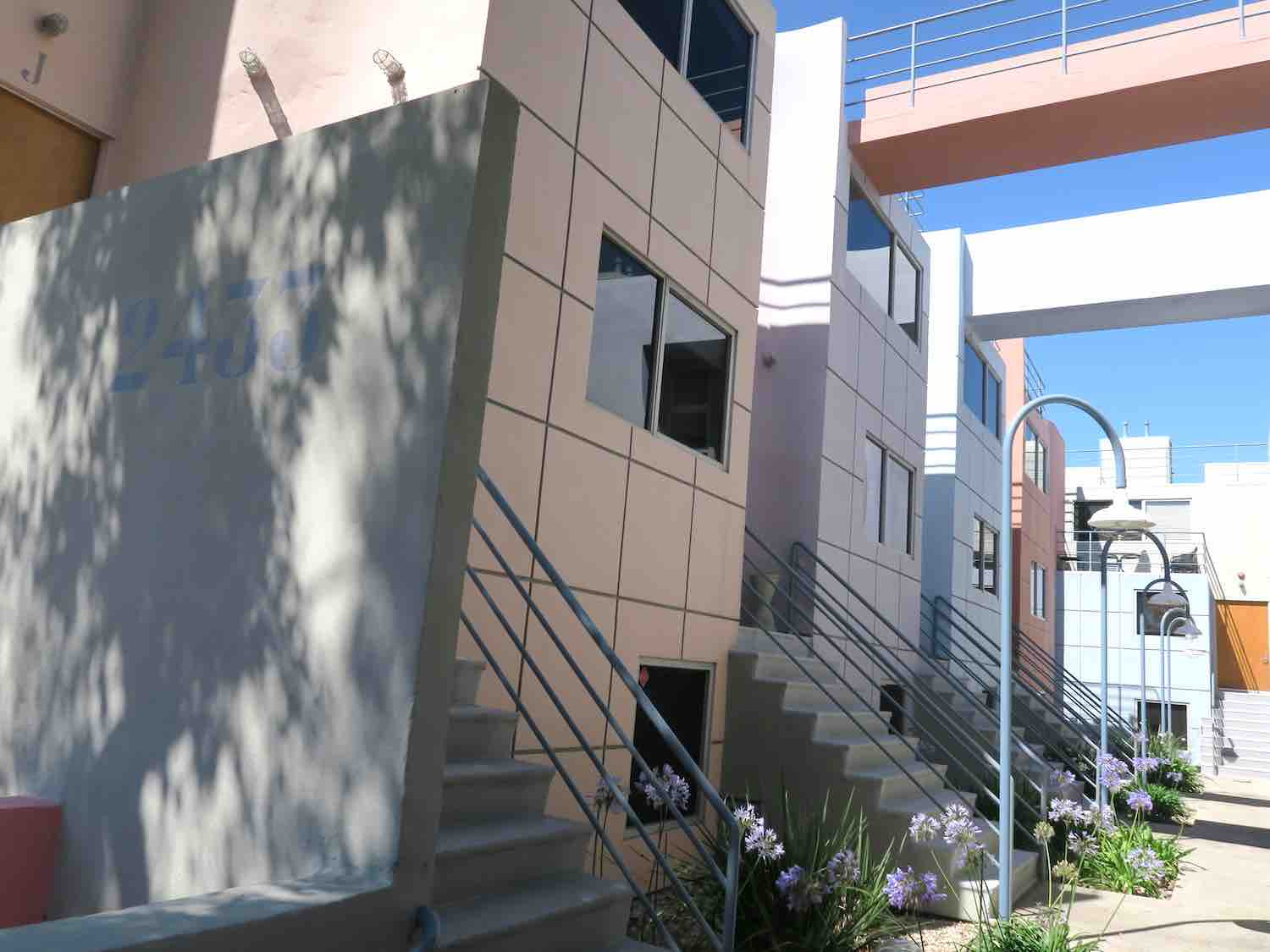
  • 2433 28th Street, Sun Tech Townhomes
  • 927 Ocean Avenue
  • 909-911 Montana Avenue
  • 401 Ocean Avenue, The Henry Weyse/Charles Morris House

The Mills Act is Santa Monica’s most powerful incentive for owners of designated properties, usually resulting in substantial reductions in property tax. A 10-year maintenance and rehabilitation plan must be submitted. This year’s contracts were approved by City Council and forwarded to the County Assessor in October.

Every year the Conservancy celebrates the preservation of Santa Monica’s architectural and cultural heritage by honoring exemplary projects and contributions.

Since 2004, award-winning projects have included residences, commercial and institutional buildings, from small to large, ranging from restoration, renovation, rehabilitation, and adaptive reuse to contemporary additions to historic buildings and homes. Awards are also presented to individuals for their stewardship of historic properties as well as for community service contributions as volunteers and advocates of preservation.

The awards presentation will be held at the Conservancy’s 2018 Annual Meeting. Don’t miss this spectacular event as we celebrate, recognize, and are inspired by the people and the projects that bring preservation to life in Santa Monica. A complete history of the Preservation Awards can be found here.

Nominate a person, structure or group for a 2018 Award! Send an email to awards@smconservancy.org by January 31 and include:

  1. A brief description of the individual, organization or project, and why you believe it warrants an award. A specific award category can be included in your proposal, but is not mandatory.
  2. Your contact information (name, address, phone number).
  3. A photo of the site if possible.

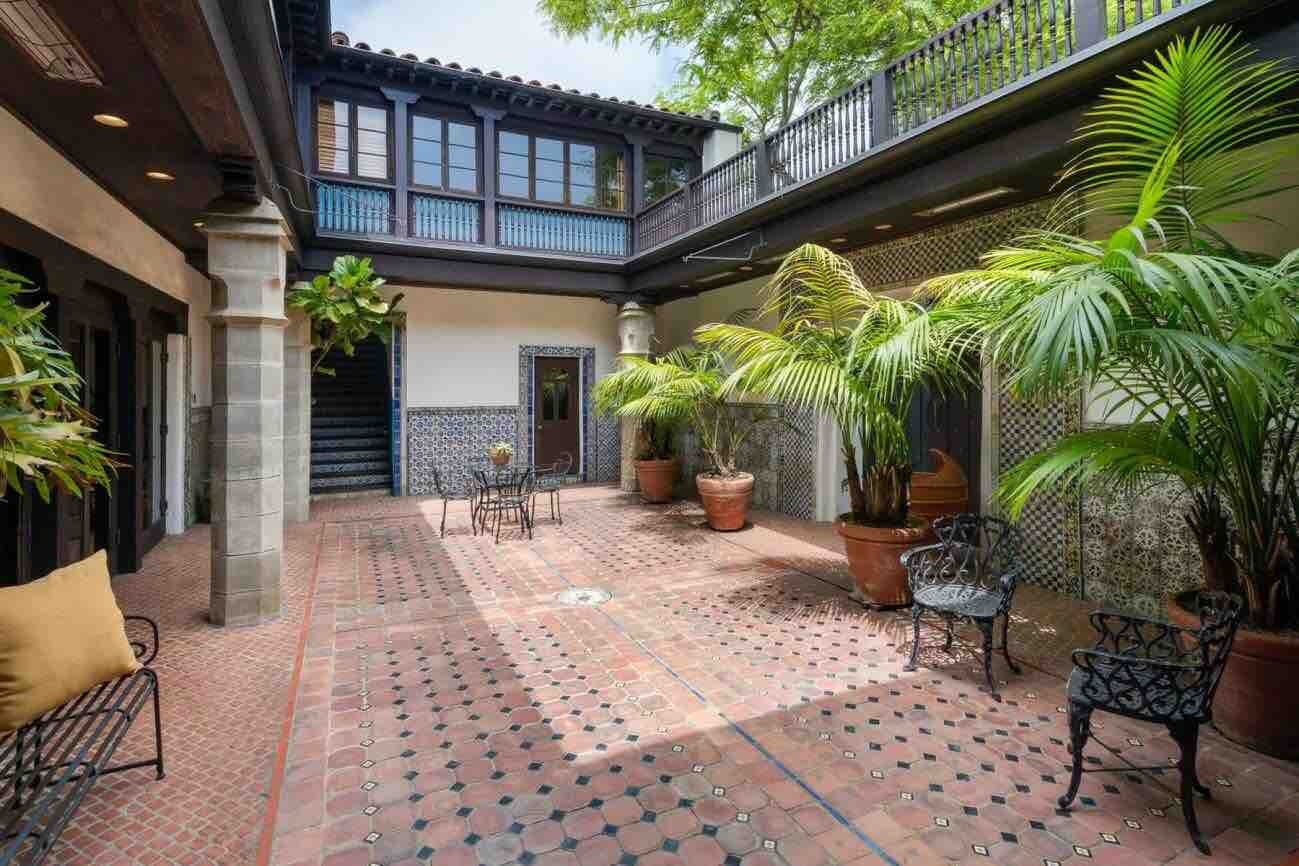
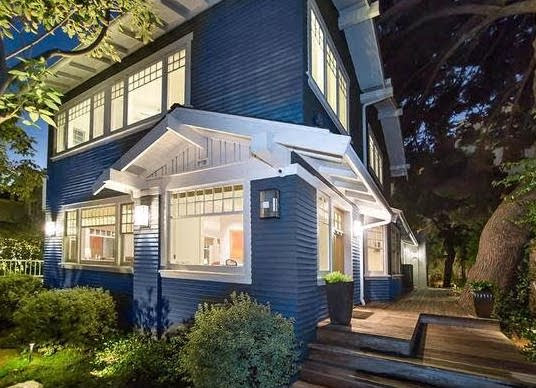
2424 Fourth Street, Brecht House, Horation West Court. Photos courtesy of DUB Architect and Brian Thomas Jones.

Past winners: Horatio West Court, John and Anna George House, and Brecht House. Photos courtesy of DUB Studios and Brian Thomas Jones.


Preservation Awards Guidelines:

You don’t need to specify what category you think fits your nomination, but the definitions below may be helpful:

Restoration: work to bring a building back to its historically authentic condition.

Rehabilitation: a broad term meaning bringing a historic resource back into service.

Renovation: includes remodeling and renewing, and can include the addition of contemporary design elements to a historic structure.

Adaptive Reuse: the adaptation of a historic structure to a new use, ideally with minimal impact on the structure’s character-defining features.

Stewardship: long-term care and maintenance of a historic building or place.

Volunteer and Service: recognition for outstanding contributions by individuals and groups in preservation efforts with the Santa Monica Conservancy.

President’s Award:  recognition for an outstanding contribution by an individual or group that exemplifies excellence in commitment to preservation, stewardship, and/or promoting Santa Monica’s history.

David G. Cameron Preservation Award: an exceptional honor, named in memory of one of Santa Monica’s pre-eminent preservationists, presented only when the occasion merits – “to individuals or organizations in recognition of their outstanding accomplishments in preserving Santa Monica’s unique heritage, and for promoting the value of historic preservation in the City.”